How to make a short film with AI
The films that work are planned first and generated second. Here is the process, in the order it pays to do it.
The short answer
To make a short film with AI, write a one-line idea, lock the look, script it, build character and location references, generate voice and music, then generate shots and cut them to the sound. Tenet, the AI film studio for Mac, runs these stages in one app, and its agent can carry out each one with your approval.
Step 1: How do you turn an idea into a brief?
Write the film in one sentence with a character, a want and a change. One real Tenet project started like this: a lonely lighthouse keeper finds a lost baby seal during a storm and raises it through one winter, until it's strong enough to swim back in the spring. That sentence already holds the cast, the places and the ending.
Next decide four things: the medium, the shape of the frame, the length, and whether someone narrates. In Tenet, the agent asks these as a short set of multiple-choice questions. The lighthouse film became a 3D animated, 16:9 story of about 60 seconds, told by an older keeper looking back.
Step 2: How do you plan before you spend?
Lay out the script scene by scene, then break each scene into shots. Count the seconds. A narrator reads roughly two and a half words a second, so a 60-second script is about 150 words, and anything longer won't fit.
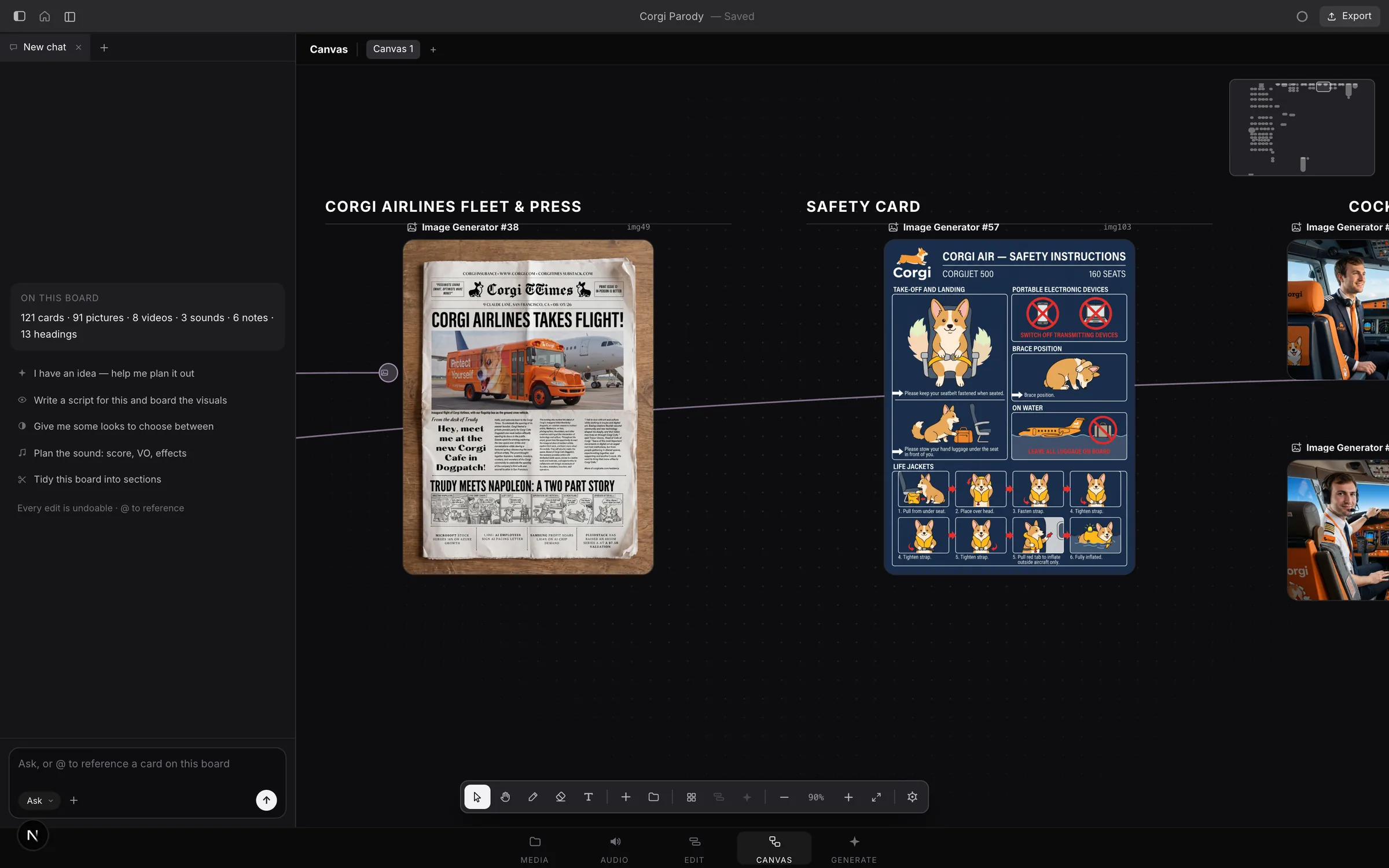
In Tenet, the plan goes on a canvas: brief, look, script, characters, locations, scenes and shots. The script is read against the shots, word by word, to check spoken pace, who's where and how long it runs. Nothing is generated until you've seen the plan.
Step 3: How do you make a cast and places?
Generate a character sheet for everyone who appears more than once, and a clean picture of each location with nobody in it. These become the references for every later shot. Read our guide to keeping characters consistent for how to set them up. The Jazzman project did this by drawing four character styles, choosing one, then redrawing him with a walking stick before a single shot was made.
Step 4: Why should the voice and music come first?
Sound sets the timing. If you generate the narration first, you know exactly how long each shot must be, and you cut to the words rather than trimming the words to fit. Choose a voice that fits the storyteller, then generate the score.
When you ask for music, describe instruments, tempo, key and how the piece changes over time. A mood word alone tends to produce generic background music. The Superpower project needed the score to change character at the midpoint, with a faster tempo and a higher register, and those specifics are what got it there.
Step 5: How do you generate the shots?
Make a start frame for each shot from your references, then animate it. Keep each prompt about one action. Expect to redo some shots, and budget for it.
If the film will have its own score, generate the shots without their built-in sound, since a second soundtrack inside every clip will fight the one you made. Keep sound on only when a character needs to speak on camera.
Step 6: How do you cut and finish it?
Put the takes in order under the voice and music. Trim on action, add titles and captions, and set the dialogue so it's clear above the music. Then watch it once without stopping, and fix the part where you noticed you were watching.
The lighthouse film ended up at about 44 seconds rather than the 60 planned, because the narration finished early. That's normal. The film tells you its length once the voice exists. Tenet exports to H.264, H.265 and ProRes 422 up to 4K when it's done.
Questions
How long does it take to make an AI short film?
It depends on the length and on how many takes you need. Planning first and locking references early saves the most time.
How much does an AI short film cost?
In Tenet, a 20 to 30 second short from idea to a cut with sound comes to about 1,000 credits, or about $10, at today's prices.
Do I need editing experience?
No. You can tell Tenet's agent what you want and it can plan, generate and edit. You can also take over on the timeline at any point.
Can I use my own script?
Yes. You can drop a script, a treatment or a brief into the chat, and the agent reads it, including PDFs and Word files.